Difficult Conversations as a Leader


I remember one of my earliest, most uncomfortable leadership conversations as a young platoon leader. It happened during pre-deployment training, where my soldiers and I were preparing for a combat rotation to Iraq. This would be my first, but for most in my tank platoon it would be another trip to the desert with some having just returned less than 6 months prior. One of my Non-Commissioned Officers (NCOs) pulled me aside and, with the conviction of someone who had already seen war firsthand, told me:
“Sir, you’ll change your tune about being all kind and gentle when you’re holding your friend in your arms as he dies.”
I’ll never forget those words.
At the time, we were being trained to execute a counterinsurgency strategy—one centered on “winning hearts and minds.” But many of the soldiers in my platoon had just returned from Operation Iraqi Freedom II (OIF 2), still carrying the physical and emotional scars of kinetic combat and unimaginable experiences. Now, here I was—brand new, wide-eyed, fresh out of ROTC at Fordham—tasked with leading and training these combat veterans for a new mission.
I had feared this exact moment long before I even stepped into my platoon. How could I tell men who had already fought and bled what they should do? How could I, who had only run around the woods during field exercises and studied warfare in books, possibly gain their trust and respect?
But this wasn’t a hypothetical anymore. The moment had arrived, and I had to respond.
Leading With Authenticity
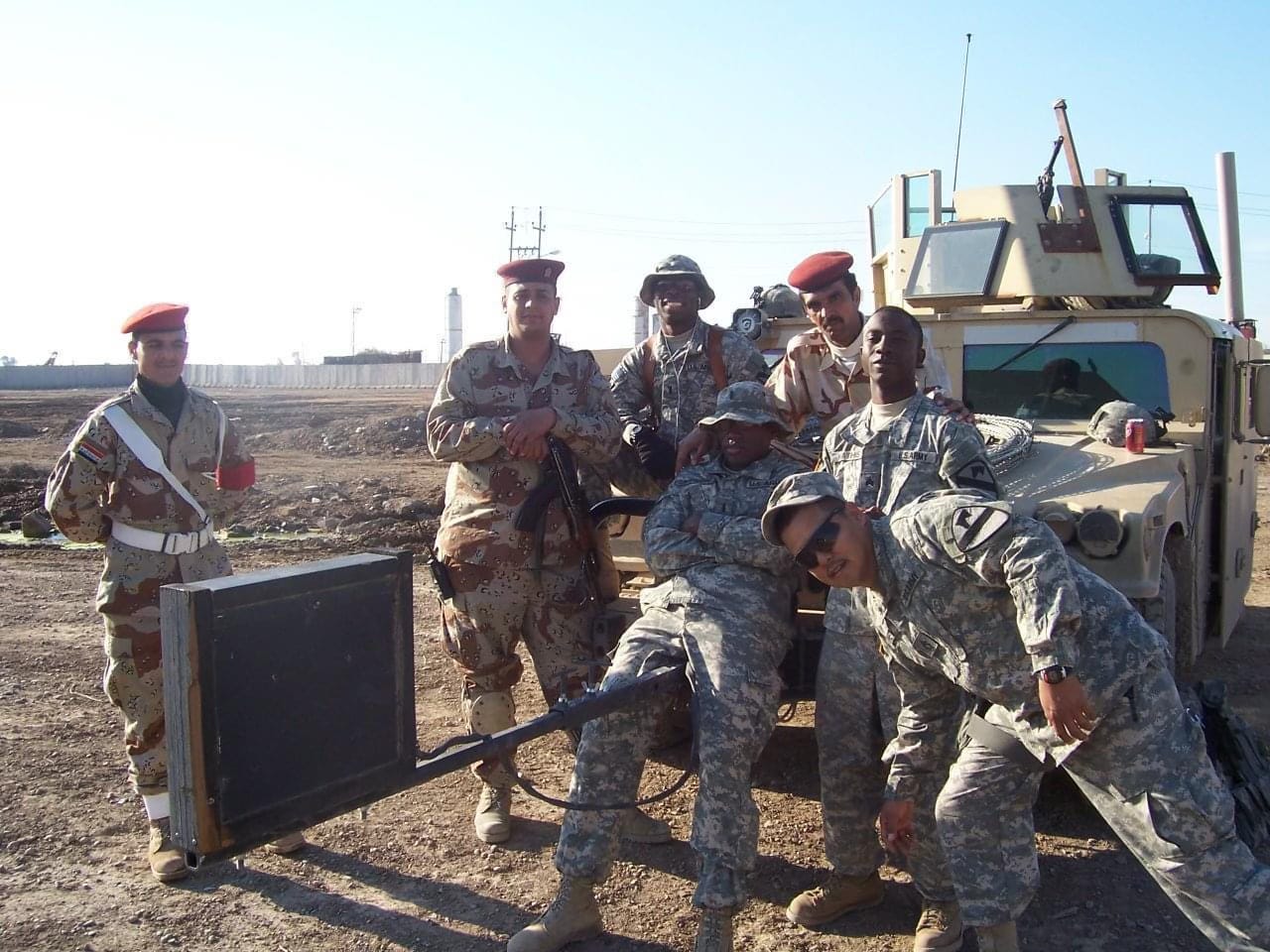
Before commissioning, a good friend—who had enlisted and returned from combat himself—gave me advice that stuck with me:
“Yo Zee, just be your true self when you talk to your soldiers, and they’ll follow you to the ends of the earth. They will see right through you if you pretend or play a part”
He spoke about his experiences as a junior enlisted soldier, running dangerous missions while under the command of officers who cared more about their careers than their troops. He saw what bad leadership looked like and warned me against becoming that kind of officer. His words solidified something in me—I decided then and there that I would lead from my heart, without compromise.
So when my NCO confronted me, implying that I would change my stance once I experienced the brutality of war firsthand, I stood firm.
I wasn’t just repeating talking points from higher. I genuinely believed in the mission. I believed that we could—and should—execute our orders while treating people with dignity and respect. To me, that wasn’t weakness; it was the foundation of what made us different from those we fought.
But my NCO saw things differently. To him, my idealism was naïve. He thought my perspective would change once I faced the pain of losing a brother in combat.
I understood his skepticism. He wasn’t challenging me to be disrespectful—he was speaking from his own experience, from the trauma he carried. But I also knew who I was. And I wasn’t willing to abandon my principles just to prove I belonged.
The Leadership Lesson That Stayed With Me
That conversation happened nearly 20 years ago, but it still lives with me today.
Because leadership is uncomfortable.
You will be challenged—sometimes publicly, sometimes by those who outrank you in experience, if not in position. You will face moments where it would be easier to conform, to nod along, to say what people want to hear so that you fit in.
But real leadership isn’t about appearing in charge—it’s about knowing who you are and standing firm in that identity. Also failing if that means you’ve done so with eyes wide open and on your own terms.
Every leader will have to answer a fundamental question at some point:
Will you play a role to gain acceptance, or will you lead from your authentic self?
If you choose authenticity, you’ll face pushback. You may even stand alone at times. But if you hold true to your values, you’ll also gain something far more valuable than approval—you’ll earn trust, respect, and the ability to lead with integrity.
And when the hardest moments come—the ones that test everything you believe—you won’t have to “change your tune.” Because you’ll already know exactly who you are.